



Serious events reported on Auror's platform increased 35% in a single year. Roughly 20% of those events involve violence or aggression in 2024, often weapons. And yet the solution to retail crime has never been clearer: it takes a network to defeat a network.
The retailers who are moving the needle are the ones who have stopped treating intelligence as something to hoard and are sharing it with other impacted retailers. They’re also bringing it to law enforcement as police-ready evidence, all while maintaining security and privacy.
In this strategy session, leaders from CVS Health and Meijer join Auror's product and partnerships teams to go beyond the buzzwords and into what collaboration actually looks like at scale. How do you build those networks? How do you prioritize when everything feels urgent? And what does responsible use of AI mean when the decisions you make have real consequences for real people?
Key takeaways from this episode:
- Building a reliable, trustworthy network is not optional in loss prevention or law enforcement. The investigators who consistently break cases are the ones who have invested in relationships long before they needed them.
- Technology accelerates what great investigators already do. Auror does not replace judgment; it surfaces intelligence faster so teams can act on it sooner.
- Reducing violent retail crime requires a Network-based approach. Arrests alone will not solve it. Intelligence sharing, prosecution, and wraparound services all have a role to play in stopping retail crime.
The network is the strategy
Ryan Themm, Corporate Investigations Manager at Meijer, is direct about what separates teams that close cases from those that do not. It comes down to relationships built before the crisis hits.
"Networking is the basic part of the game that you just gotta do well. So when you have a problem, you can start sharing information and call that phone-a-friend contact that you can share intel with, get a lead, break a case. We always want to find one more victim retailer in a case, bring them in, get them involved, and build that bigger case so you can bring one big, beautiful prosecution to your prosecutor to make that case and make the victims whole and shut down the fence."
Tanya Johnson, Chief Product Officer at Auror, explains what is driving retailers to collaborate more than they have in the past. Law enforcement is far more likely to engage when a case crosses jurisdictions or impacts multiple retailers. Tech like Auror is making it possible for retailers to connect the dots on repeat retail offenders, driving a shift from solo investigations to shared intelligence that unlocks exponentially more cases.
From reporting to prevention
The tools that make this possible have moved well beyond basic incident logging. Tanya walked through a couple of key Auror platform capabilities that are directly changing how investigations get built and prioritized.
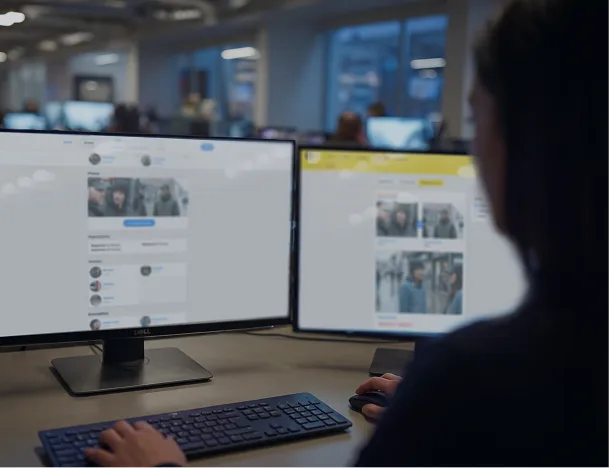
Connect the Dots uses machine learning and image recognition to find connections that would take human investigators weeks to surface manually. When the same person is hitting multiple stores, the platform pulls that together and removes their anonymity.
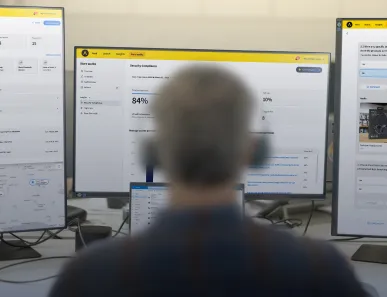
Suggested Investigations goes further, identifying repeat persons of interest that are offending at a velocity that will hit investigation thresholds in months, then surfacing that intelligence now so teams can act sooner. The average investigation in the US involves around $375,000 in loss. Getting ahead of that before it accumulates is the point.
"We've seen a 35% increase in serious events reported in the [Auror] platform just over the last year alone. Retailers are getting far more open to collaborating with each other and not… behind the scenes through LinkedIn and WhatsApp groups, but actually working together on investigations and collaborating very directly with law enforcement. It takes a network to beat a network."
More than 50% of investigations are now being initiated by suggested investigations rather than waiting for a threshold to be hit manually. That is the kind of shift that changes outcomes.
A community-based response to violent crime
Ben Dugan, Executive Director of Central Investigations at CVS Health, brings three decades of retail loss prevention experience to a question that the whole industry is grappling with: what will it actually take to reduce violent retail crime?
"We need to come together as a community around the intelligence sharing, information between retailers and law enforcement and prosecutors and all levels of law enforcement, to prosecute and arrest and eliminate the threat for the people that need to be in jail — the recidivists and our violent offenders — and then come together as a community to try to help provide services for the people who do need it, who could benefit from mental health treatment or drug addiction treatment or homeless shelters or some sort of sentencing that will give them the treatment they need to change their behavior."
The answer is not one thing. It is a combination of:
- Informed decisions based on real intelligence
- An honest look at the root causes of violence
- A community willing to act on both at once
Ben is optimistic. Retail fatalities are trending down. More resources exist now than at any point in the history of the industry. But the work is far from done.
The tools are here. The Auror Network is growing. The question now is how fast the industry can move together. CVS, Meijer, and the teams building the technology are not waiting to find out.
Watch the full episode to hear Ben's three-part framework for reducing violent retail crime, how Tanya's team approaches responsible AI in a high-stakes environment, and what Ryan is most excited about as license plate recognition (LPR) starts accelerating case connections at Meijer.